
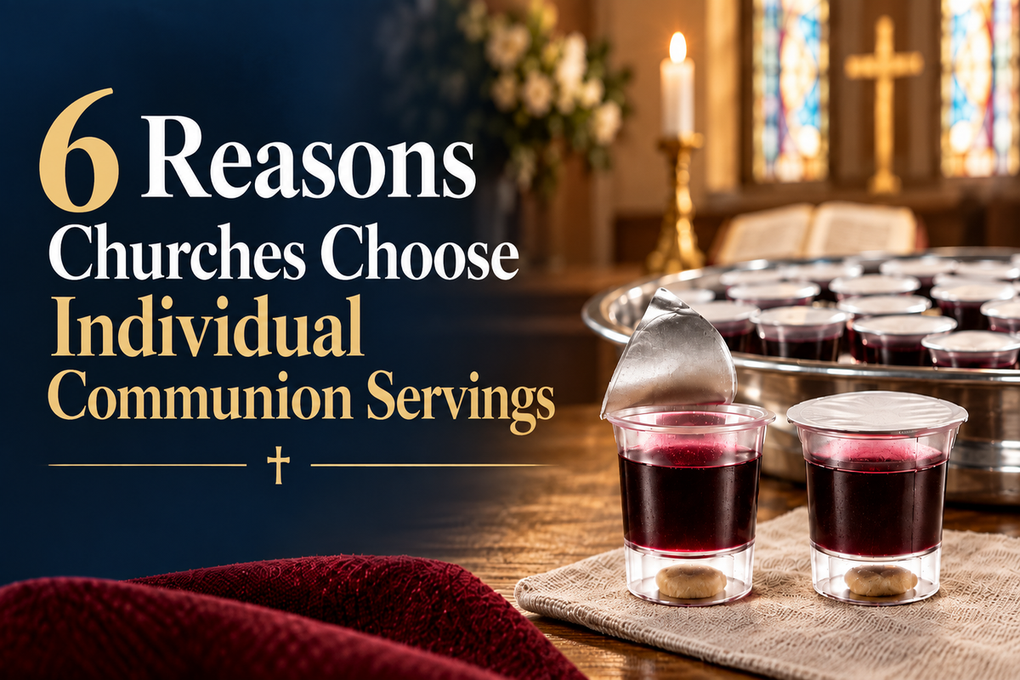
6 Reasons Churches Choose Individual Communion Servings
Posted by WCC Products on 17th Sep 2026
Some congregations serve Communion weekly, while others gather around the Lord's Table monthly or during special services. Some use trays and prepare the elements before worship, while others prefer individual communion servings that are already prepared and ready to distribute. For many churches, prefilled communion cups provide a practical way to simplify preparation without taking the focus away from the meaning of Communion itself.
As we discussed in Why Communion Matters: Remembering Christ Together, Communion is ultimately about remembering Christ's sacrifice and gathering together in worship. The supplies a church chooses should simply help support that moment.
Here are six reasons churches choose individual communion servings.
1. Individual Servings Simplify Communion Preparation
Preparing Communion can involve more work than people realize. Volunteers may need to pour juice, prepare bread or wafers, organize trays, transport supplies, and clean everything afterward.
Individual communion servings help reduce many of those steps because the elements are already prepared and sealed before the service begins.
This can be especially helpful for churches that:
- Serve Communion frequently
- Have limited volunteer support
- Hold multiple services
- Need to prepare quickly between services
- Want a consistent process from week to week
For churches considering more frequent Communion, our article Should Your Church Serve Communion Weekly? explores how preparation and consistency can become especially important when Communion is part of the regular worship rhythm.
2. They Help Reduce Handling Before the Service
Because individual communion cups are sealed until they are ready to be served, volunteers do not need to handle the juice and bread or wafer portions individually during preparation. That can help create a cleaner, more organized process from storage to distribution. It also means church teams can prepare trays, seats, tables, or other serving areas ahead of time without pouring individual portions immediately before worship.
For churches comparing different prefilled options, our Chalice vs. Simply vs. Elements guide explains the differences between bread-based and wafer-based WCC product lines.
3. Distribution Can Be Simple and Consistent
Individual servings make it easier to provide each person with a complete Communion portion.
Depending on the church's worship style, prefilled cups can be:
- Passed in trays
- Distributed by ushers or volunteers
- Placed at Communion stations
- Prepared at seats before the service
- Carried to smaller ministry gatherings
This flexibility can be useful for both smaller congregations and churches serving hundreds or thousands of people.
The right quantity will depend on attendance and how frequently Communion is served. If your team is unsure how much to keep on hand, our How Many Communion Cups Do I Need? A Simple Church Size Guide can help with planning.
4. Individual Communion Servings Work Beyond Sunday Worship
Communion ministry does not always happen inside the sanctuary. Pastors, chaplains, elders, and ministry volunteers may also serve Communion during:
- Bible studies
- Retreats
- Hospital visits
- Nursing home ministry
- Assisted-living visits
- Homebound ministry
- Chapel services
- Small group gatherings
Individual servings allow ministry leaders to bring only what they need without transporting bottles of juice, separate containers of bread or wafers, and additional serving supplies.
Our guide to Communion for Hospitals, Nursing Homes, and Homebound Ministry goes deeper into choosing practical Communion supplies for care and mobile ministry settings.
5. Churches Can Offer Different Communion Options More Easily
Congregations often have different preferences and dietary needs. Some churches prefer bread. Others prefer wafers. Many also want to keep gluten-free Communion available for members and guests who need it. Individual servings can make it easier to identify and distribute different options without changing the entire Communion setup for the congregation.
World Communion Cups offers gluten-free communion options alongside traditional products, allowing ministries to choose the combination that works best for their church.
If your church is considering adding a gluten-free option, our article Gluten-Free Communion Explained: What It Means and What to Look For provides a practical starting point.
6. They Make Storage and Planning More Manageable
Churches need Communion supplies that are ready when they need them. Individual servings can be stored in their original packaging and organized according to service size, frequency, and ministry needs.
Simple inventory practices such as using older supplies first and keeping products in a cool, dry location can help churches stay prepared throughout the year.
Our guide on How to Store Prefilled Communion Cups for Freshness offers additional storage and inventory recommendations.
Planning ahead can be particularly useful before:
- Easter
- Christmas
- Baptisms
- Retreats
- Conferences
- Church anniversaries
- Special worship services
The goal is simple: have the supplies ready so the ministry team can focus on the service itself.
Are Individual Communion Servings Right for Every Church?
Church traditions, worship styles, congregation preferences, and Communion practices vary widely. Some churches prefer preparing and serving the elements traditionally, while others find individual servings better suited to their ministry.
If your team is considering individual communion cups for the first time, trying the products beforehand can make that decision easier. Our recent article 5 Reasons to Request Communion Cup Samples Before You Order explains what your ministry team should compare when evaluating different products.
Churches choose individual communion servings for many reasons, but convenience alone is not the goal. The purpose is to make preparation and distribution simpler so pastors, volunteers, and ministry leaders can spend less time worrying about logistics and more time focused on worship and the people they serve. For some churches, that means a traditional presentation. For others, it means a straightforward bread-and-juice option or a wafer-based product.